Activities: Basketball
If I could recommend one sport to introduce to your homeschooled child, it would be basketball. Not only is it great exercise and loads of fun to play, it is easy to set up a basket or find a court to use. Competition is inside (most of the time), so parents don’t have to get cold or wet or sunburned to cheer on the team. Equipment costs are low with purchasing only a pair of shoes, a ball, and shorts. If you want a court of your own, a moveable, adjustable hoop is reasonably priced and will last for years.
The key to teaching your child how to play any sport is teaching the fundamentals correctly, and that might mean forgetting all the things that you thought you knew about the sport. Search the Internet for quality sources of instruction, and begin at the beginning. Start with the NFHS for a good, comprehensive look at the fundamentals of basketball and several other sports.
Young kids need kid-sized balls and a lower basket. A regulation ball and basket are used beginning in about 7th grade. Until then, allow your child to learn proper shooting form with the ball and hoop height more appropriate for his or her size and age. You didn’t hand Crime and Punishment to your beginning reader, so don’t force your child into bad habits by using equipment that is made for teens and adults.
You’ll be amazed at what a seven year-old can learn to do with a basketball –dribbling with eyes up, ball handling, passing, shooting layups and close shots with good form. Basketball leagues with parent-coached teams are sometimes available for this age . These give your child an opportunity to be part of a team and to meet new friends.
As a sport-parent you have another responsibility as well, and that is to be positive about your child’s playing. Be sure to say the magic words that all kids want to hear from Mom and Dad: “I love watching you play.” Don’t criticize your child for a missed shot or a dribble off the foot. Players already know when they have made a mistake, and it’s the coach’s job to correct and teach. Your job is be encouraging and supportive.
Support: Homeschooling Organizations
The most influential people in my homeschooling experience have been fellow homeschoolers. Whether it is a state- or county-wide organization or a more informal group of families, you will find needed encouragement and information to help make your endeavors succeed. It is easy to remain isolated in the hustle and bustle of everyday home and school life, but don’t fall into that trap. Reach out to others and learn from them. You will find after a while that you, too, have something to offer.
Most state homeschool organizations organize yearly homeschool conventions with inspiring guest speakers and popular vendors of curriculum and school supplies. They also have contact information for small groups within their states. You may not think of yourself as a “joiner” type, but in this case, you might surprise yourself since local groups tend to be moms seeking companionship, encouragement, and ideas. Local groups also offer parent-led group activities for children such as field trips, projects, sports, game day, and science fairs. If you can’t find a local support group after contacting the state association, you can form your own. With just a few families, you’d be surprised at what you can offer to each other and your children.
Look here to find your state’s homeschool organization or local association on the Homeschool World website.
The Multi-faceted Task of Teaching Reading
One of the most important goals that I ever set for myself was to teach my children to read well. With a good phonics program, good books, and extensive, daily read-aloud time, that goal became reality. Reading opens up doors to a great education, nearly limitless career opportunities, and the world of literature.
To assist teachers with effective reading instruction, Texas and Alaska both have posted interesting, helpful, free materials on their state websites.
First, the Texas Reading Initiative published a five-book set of research-based findings to improve the teaching of reading. These are available for download from the Texas Education Agency. Read these for your own education as a Secondary Home Scholar. They will give you some ideas for confident teaching of reading in all subjects. Any beginning teacher would benefit from reading these, and many experienced teachers could learn a few things as well.
Add these Red Book Series documents to your teaching arsenal.
*Beginning Reading Instruction, Book 1
*Comprehension Instruction, Book 2
*Examining Phonics and Word Recognition, Book 3
*Content Area Reading, Book 4
*Vocabulary Development, Book 5
Second, a single reading passage from the standardized testing page of the State of Alaska provides a great example of non-fiction: “Watch Out for Wombats.” This passage would be useful in teaching expository text structures common to non-fiction writing and practicing non-fiction comprehension strategies. It is given as an example for fourth-graders, but would benefit younger and older students who need concrete examples of expository text.
Teaching reading is more than just teaching phonics and pronunciation of words. It also involves studying different text structures, the most common being narrative (what you find in stories: setting, plot, characters, conflict, events, resolution) and expository (what you find in non-fiction: facts, figures, who, what, where, when, why, relationships, organizational strategies). Comprehension of the text is vital whether the reading selection is narrative or expository. If your child is still struggling with decoding text, it’s possible that he or she isn’t ready to read yet, but in the meanwhile, reading aloud will still allow you teach comprehension skills and maintain your child’s enthusiasm for literature.
History: Hillsdale College Online Coursess
Happy Independence Day!
Celebrate by registering for a free history or U.S. Constitution class developed by Hillsdale College. These are appropriate for high school students or parents desiring to better understand our history and government.
Four ten-week courses are currently available.
*Constitution 101: The Meaning and History of the Constitution
*Constitution 102: The Progressive Rejection of the Founding
*History 101: Western Heritage –Genesis to John Locke
*History 102: American Heritage –Colonial Settlement to Reagan
You may register here.
Math and Science: AIMS for Primary Grades
Looking for activities that integrate math and science for your young learner? Look no further than AIMS Education Foundation. Their activities are concrete and hands-on, just right for primary-age learners. They are also good exercises for beginning home school parents who need lots of guidance, while more experienced home educators will find them flexible as well as academically solid.
AIMS is so confident that teachers will like their products that they offer many free lessons on their website. When browsing their activity books, choose the preview option. This provides not only the table of contents for that book, but also a list of the math and science skills addressed within the lessons and one free, complete sample lesson to print or download.
Whether you are looking for math or science lessons, literature connections, equipment, or math manipulatives, AIMS can get you started in the right direction.
The exercises are designed for groups, but they work fine with just a parent and child working as partners. Writing is involved in all of the lessons, sometimes as simple tally marks or X’s, sometimes as a paragraph, summary, or story. Don’t hesitate to take dictation for your child for the latter, allowing your child to freely and easily express ideas without getting hung up on the actually writing.
I recommend the following season-themed books to get you started with your K-2 student:
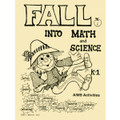
Fall into Math and Science
Free Lesson: “Apples a Peel to Me”

Glide into Winter with Math and Science
Free Lesson: “Catch Me if You Can”
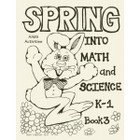
Spring into Math and Science
Free Lesson: “Floating Fruit”
As you work through these activities in conjunction with daily arithmetic concepts, you will see your child make important connections between math and science studies and the real world.
Getting Started: Your Reasons for Homeschooling
Homeschooling is a marathon, not a sprint. It is a lifestyle choice, not a school choice. It requires time, energy, patience, and much love and forgiveness. With this in mind, a family’s decision to home school should be a thoughtful one, not something whimsical or reactionary.
What exactly are your reasons for home schooling? Take a minute to write them or down right now before you finish reading this post.
Now consider the following reasons that other people choose homeschooling.
Educational: Your child is being given “busy work” at school because he/she finishes assignments quickly and must wait for classmates to finish their work. Your child is struggling in school and needs extra help. You are appalled by the amount of homework your child brings home after spending all day at school. You have been successful in teaching your child many life skills, and you view academics as an extension of that. You love reading to your child and teaching your child new things. You disagree with the philosophy of public schooling. Much time in public school is spent on classroom management instead of academics. Your child’s teacher is swamped with the demands of the classroom and is unable to spend time correcting your child’s errors. You disagree with the school’s policies. You have genuine concerns about the school or teacher which the administration is either unable or unwilling to address.
Academic: You want your child to be taught subjects that your school doesn’t offer. Your school teaches ideas that directly contradict what you have taught or desire to be taught to your children. Children learn best within a small group, not a packed classroom. You want the focus of your young child’s education to be the three R’s. Your child’s school consistently yields low test scores in math, reading, and writing. Your school encourages children to rediscover concepts rather than using direct instruction to impart these concepts to students in an efficient manner. You want to give your older child more freedom to pursue an individualized education.
Social: Your child’s peer group at school disturbs you. Your child is unhappy at school due to bullying, lack of friends, or not fitting in. Your child is being swayed negatively by peer pressure.
Familial: The school’s schedule negatively impacts your family. The school calendar prevents you from taking your child on trips. You don’t like sending your children away for eight hours each day. Your work schedule prevents you from spending much time with your children after school. Your family’s circumstances require frequent moves.
Physical: Your child is handicapped and could use some personal space and privacy during the school day. You are ill or handicapped and have come to realize that time with your child is a precious commodity. You child has medical issues such as diabetes, allergies, seizures, etc. which require frequent doctor visits, daily management, and personal adjustment.
Religious: You believe that God has placed upon parents the responsibility of educating their children. The school curriculum and culture are secular, denying the existence of God and stifling the expression of your child’s faith.
Emotional: Your child needs your love and discipline every day, not just in the evenings and on weekends. You child has experienced a loss or traumatic event that requires your attention.
Reading through this list may have caused you to rethink and refine your reasons for homeschooling. I hope so, because if you have a solid base on which to build your homeschool, the storms of life will be less likely to distract you from your purpose or shift your priorities. If you haven’t already edited the list you wrote at the beginning of this post, you should do that now. Keep it. Refer to it when in doubt of your choice or to answer questioning family members and friends. Use it as a motivator in shaky time.
The Handwriting Debate
An idea floating about our culture is that cursive handwriting is just one method of making marks on paper and that the method doesn’t matter. I think that is simplistic and erroneous.
Making marks on paper via a pencil creates neural pathways that help connect the task to the thought. The shaping of the letters helps children to connect phonics to the words being formed. The creation of capital letters and lower case letters helps to teach the proper capitalization because it requires thought and effort to create the different shapes and sizes. Add cursive to the mix and you have the opportunity to further these advantages.
Many educators claim that cursive handwriting is outdated in this digital age, but I wonder if the effort involved in teaching proper, legible, beautiful handwriting is the real issue, because that requires significant time and one-on-one interaction with the writer. After all, computer programs to teach keyboarding require very little teacher involvement—the programs are self-correcting and provide copious flashes of lights, cute sounds, and bright colors to keep children interested in the task. Educators also claim that cursive is low on their list of daily priorities and that there isn’t time during the day even if they were so inclined to teach it.
The final product of penmanship is a personal creation unlike anyone else’s, even when a group of children have all written the exact same words. On the other hand, a computer-generated and printed word document containing that same text will typically have the same appearance whether created by a child or an adult since readers have a narrow range of acceptable font styles and sizes for documents.
In addition to cognitive and artistic benefits to cursive handwriting, remember that in order to read cursive writing well, one needs to write it. Personal notes from friends and family, journals, letters, lists, recipes, nad other family and historical documents documents fill our lives. Our country’s founding documents were written in beautiful cursive for all to read, and American citizens should be able to read these for themselves rather than depend upon someone else’s transcription of them into print.
The debate on this won’t end any time soon. In the meanwhile, you can read other people’s opinions here at CBS News and the Washington Post.
Science: A General Guide
It’s summer, so I’m thinking about science. Myriad animals – mice to moose –are out and about. Breezes carry scents of metabolizing plants. Storms and stars catch our imaginations. Cave, rocks, and mountains beckon. Our world is an amazing place, so when it comes to science, let that wonder and excitement be front and center whether it’s summer or not.
Actively involve your child in the world and develop process skills such as observing, categorizing, measuring, gathering and recording data, interpreting data, inferring and predicting, and, of course, “publishing” findings.
Keep interesting pets. Grow houseplants and gardens. Watch meteor showers. Hike. Use field guides to identify anything and everything. Feed birds. Visit zoos, museums, gardens, planetariums, and aquariums. Study different methods of marking the passage of time. Pan for gold. Hatch chicks. Keep a personal growth chart including height, weight, hands, and feet. Experiment in the kitchen. Use simple tools. Collect plants and leaves using a plant press. Make things that fly and float and glide. Build snow and ice structures. Document changes from season to season with photos, sketches, and calendars. Grow crystals. Make models, displays, and collections. Borrow or buy a microscope with prepared slides and blanks. Create rainbows with crystal prisms. Experiment with lenses and mirrors, vibrations and music. Follow websites such as the USGS volcano observatory and UAF’s aurora forecast. Build outdoor fires and cook in the flames and coals. Explore tide pools, ponds, swamps, and creeks. Record weather, temperatures, and sunrise/sunset each day for a month. Soak your sandbox and build castles.
Your child is immersed in a world just waiting to be explored. Who knows what you might discover when you explore it together.
Getting Started: Know your State’s Laws
Some states require that parents notify the local school district of intent to homeschool; some do not. Some require an outline of coursework to be used; others do not. Some states are homeschool-friendly; others make homeschooling more difficult. Whatever the case, every parent contemplating homeschooling must know the laws that apply in their particular state of residence.
The best resource that I’ve found for understanding homeschooling laws is the Home School Legal Defense Association which is located in Purcellville, Virginia. If you aren’t already familiar with this organization, you need to bookmark their website, hslda.org, and make it a regular stopping point for legislative news. This group is an “advocacy organization established to defend and advance the constitutional right of parents to direct the education of their children and to protect family freedoms.” How neat is that!
You might be thinking, “I can get the same information from my state’s Department of Education or the local school district.” That would be convenient, and should be the case, but it isn’t necessarily true. Most school administrators and teachers I have met are unfamiliar with the laws, and the website for your state may post incomplete or inaccurate information pertaining to homeschooling. For example, I compared HSLDA’s summary of Alaska’s laws with what is posted on the Internet for the State of Alaska. Alaska’s law is clear that a family may homeschool with great freedom, completely independent of any school district, yet the website gives the impression that all homeschoolers in the state affiliate themselves with one of the many districts that offer “homeschool” or “correspondence” programs. You may see these for yourself at the following web addresses:
- HSLDA’s Legal Analysis – http://www.hslda.org/laws/analysis/Alaska.pdf
- State of Alaska website – http://education.alaska.gov/parents.html
Be informed. Trust the staff of HSLDA. They are committed to homeschooling and will give you the legal facts you need.
Dictionary of Home Schooling
Home Scholar
-noun
A student who conducts most of his or her formal studies at home rather than in a public or private school; a home-taught pupil
“The home scholar quickly shelved his penmanship journal and reached for the new math project he’d been anticipating.”
* * * * *
Secondary Home Scholar
-noun
The home educator who suddenly understands a myriad of concepts somehow missed during his or her own K-12 education
“Despite having earned a Master’s of Education at the state university, Mom just learned that essential phonics rule of ‘c followed by e, i, or y makes the soft s sound’ as in cent, city, and cynic.”
 The Home Scholar