Math and Science: AIMS for Primary Grades
Looking for activities that integrate math and science for your young learner? Look no further than AIMS Education Foundation. Their activities are concrete and hands-on, just right for primary-age learners. They are also good exercises for beginning home school parents who need lots of guidance, while more experienced home educators will find them flexible as well as academically solid.
AIMS is so confident that teachers will like their products that they offer many free lessons on their website. When browsing their activity books, choose the preview option. This provides not only the table of contents for that book, but also a list of the math and science skills addressed within the lessons and one free, complete sample lesson to print or download.
Whether you are looking for math or science lessons, literature connections, equipment, or math manipulatives, AIMS can get you started in the right direction.
The exercises are designed for groups, but they work fine with just a parent and child working as partners. Writing is involved in all of the lessons, sometimes as simple tally marks or X’s, sometimes as a paragraph, summary, or story. Don’t hesitate to take dictation for your child for the latter, allowing your child to freely and easily express ideas without getting hung up on the actually writing.
I recommend the following season-themed books to get you started with your K-2 student:
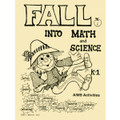
Fall into Math and Science
Free Lesson: “Apples a Peel to Me”
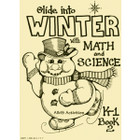
Glide into Winter with Math and Science
Free Lesson: “Catch Me if You Can”
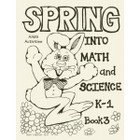
Spring into Math and Science
Free Lesson: “Floating Fruit”
As you work through these activities in conjunction with daily arithmetic concepts, you will see your child make important connections between math and science studies and the real world.
Science: A General Guide
It’s summer, so I’m thinking about science. Myriad animals – mice to moose –are out and about. Breezes carry scents of metabolizing plants. Storms and stars catch our imaginations. Cave, rocks, and mountains beckon. Our world is an amazing place, so when it comes to science, let that wonder and excitement be front and center whether it’s summer or not.
Actively involve your child in the world and develop process skills such as observing, categorizing, measuring, gathering and recording data, interpreting data, inferring and predicting, and, of course, “publishing” findings.
Keep interesting pets. Grow houseplants and gardens. Watch meteor showers. Hike. Use field guides to identify anything and everything. Feed birds. Visit zoos, museums, gardens, planetariums, and aquariums. Study different methods of marking the passage of time. Pan for gold. Hatch chicks. Keep a personal growth chart including height, weight, hands, and feet. Experiment in the kitchen. Use simple tools. Collect plants and leaves using a plant press. Make things that fly and float and glide. Build snow and ice structures. Document changes from season to season with photos, sketches, and calendars. Grow crystals. Make models, displays, and collections. Borrow or buy a microscope with prepared slides and blanks. Create rainbows with crystal prisms. Experiment with lenses and mirrors, vibrations and music. Follow websites such as the USGS volcano observatory and UAF’s aurora forecast. Build outdoor fires and cook in the flames and coals. Explore tide pools, ponds, swamps, and creeks. Record weather, temperatures, and sunrise/sunset each day for a month. Soak your sandbox and build castles.
Your child is immersed in a world just waiting to be explored. Who knows what you might discover when you explore it together.
 The Home Scholar